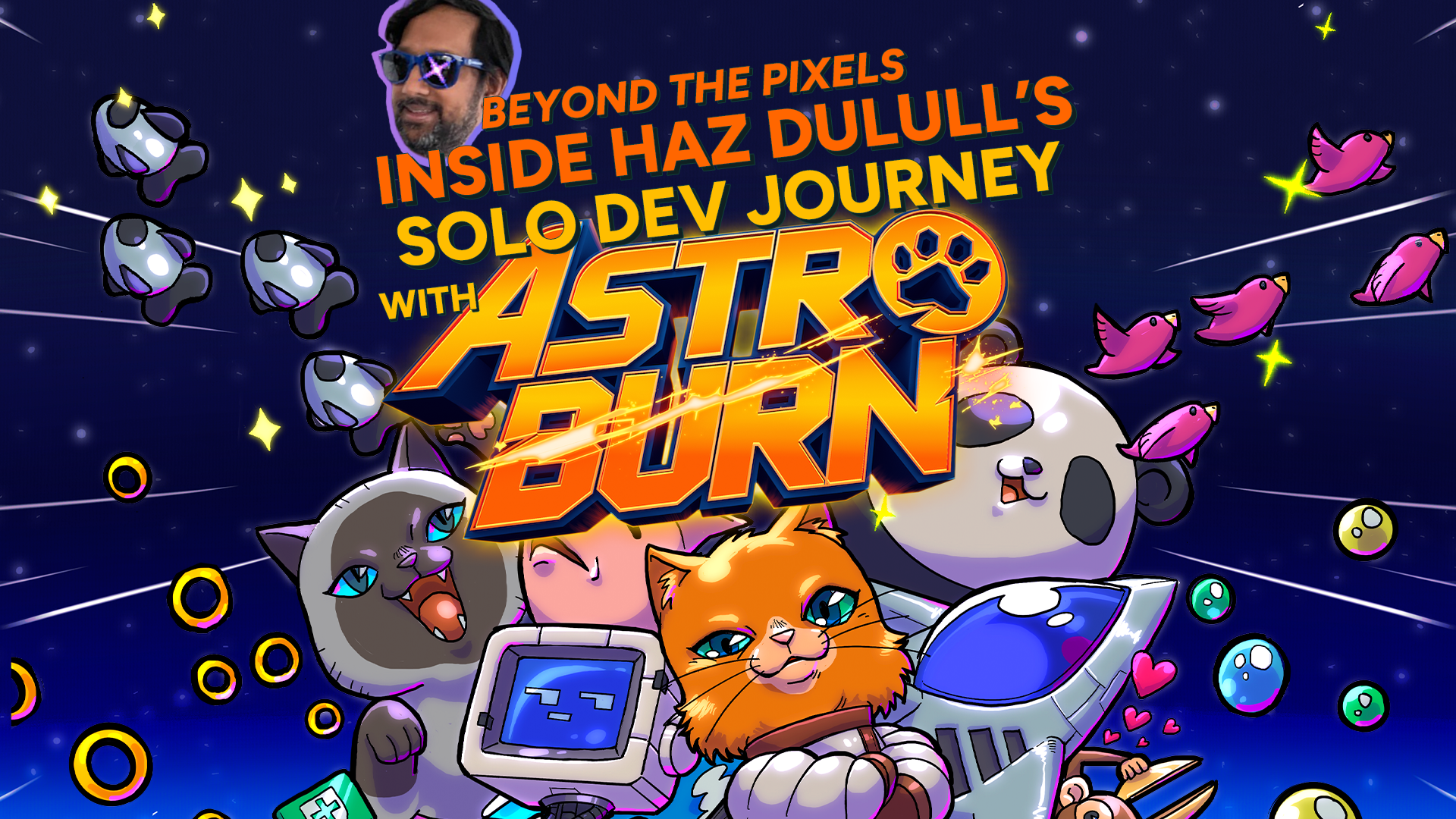
Forget sprawling AAA studios - Astro Burn proves that one creator with passion, grit, and a killer sense of style can still light up the cosmos.
HaZ Dulull - the creative force behind Beyond The Pixels - has journeyed through every corner of storytelling: from VFX work on The Dark Knight and Hellboy II, to directing/producing indie sci-fi films like The Beyond and 2036 Origin Unknown, to Directing shows like Fast Layne and Under the Sea: A Descendants Story for Disney+, building worlds in Fortnite, and directing cinematics for DUNE: Awakening.

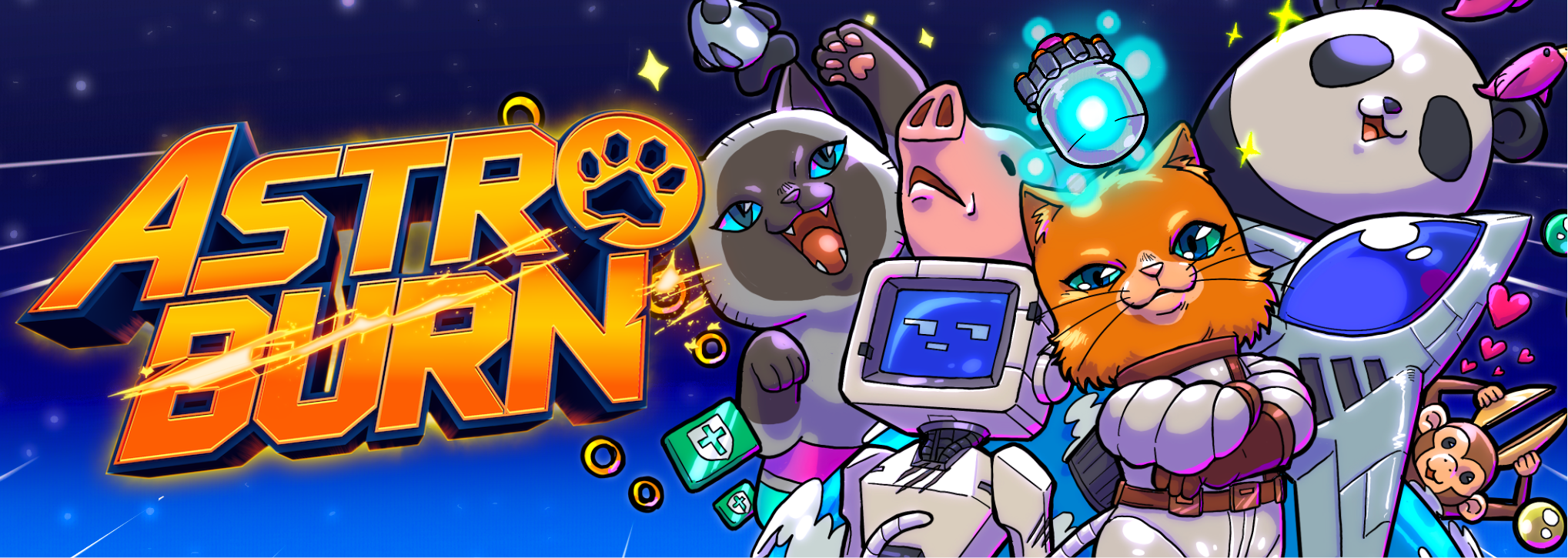
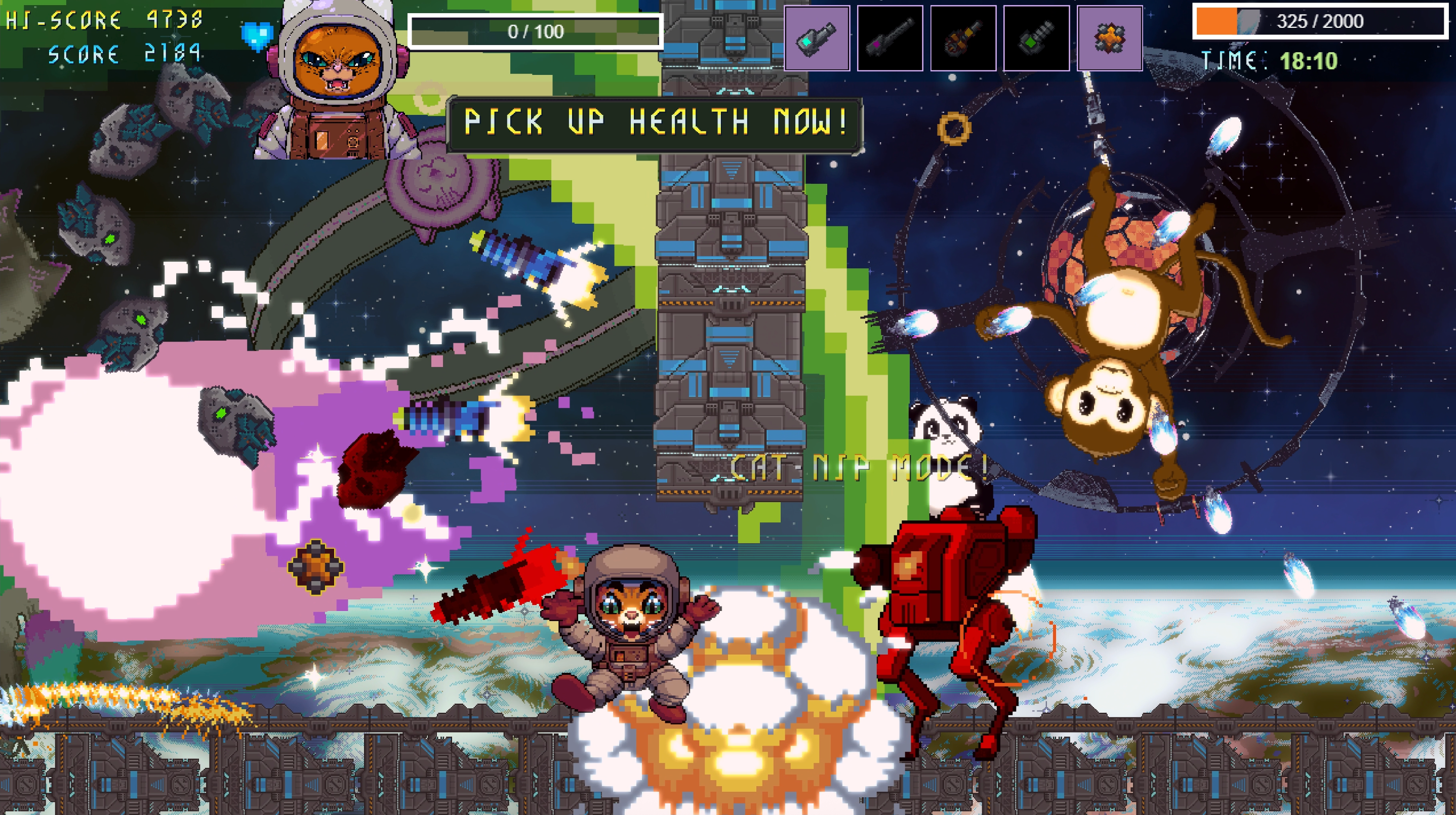
His latest mission takes him somewhere new: into the cockpit of a retro-inspired sci-fi cute-em-up, where a fearless feline pilot battles waves of chaotic, oversized adorable creatures across Space and Earth.
With Astro Burn, HaZ brings the energy of 16-bit arcade shooters into the modern age - fast, stylish, and oozing nostalgia - built through lean development and powered by community-driven tools like FirstLook.
We caught up with HaZ to chat about the making of Astro Burn, his evolution from film director to solo game developer, and how staying agile (and maybe a little chaotic) helped him create one of the slickest shoot-'em-ups of the year.
🎤 Interview: 10 Questions with HaZ Dulull, Creator of Astro Burn and Founder of Beyond The Pixels
1. Let’s start with the vibe - “Beyond The Pixels.” What does that name represent for you and your studio?
Well, I have to admit — I’ve always had a thing for the word ‘Beyond.’ My first feature film was called The Beyond, and my animated feature released last year was Max Beyond. I guess I naturally gravitate toward that word because it captures my sense of wonder, curiosity, and the desire to push past what we think is possible.
For me, beyond represents imagination without limits. So when it came to naming the studio, I wanted something that reflected that spirit — a place where I could explore how far we can go in computer graphics, from Unreal Engine real-time cinematics to the 2D retro-style pixel worlds I’m creating today. It’s all about constantly reaching for what lies just beyond the horizon.
2. From film sets to Unreal Engine - your creative journey spans worlds. What made you trade directing cameras for directing chaos in a cute-em-up bullet hell game?
It might look like I enjoy moving from one demanding creative industry to an even tougher one — from Film & TV into Video Games — but the truth is much simpler: games have always been in my DNA.
My very first career was in games. While studying in London, I interned at a studio in Camden working on Motocross Mania for PC and PlayStation One (yes… that definitely shows my age!). Back then, a single 256×256 texture map could handle an entire bike — it was all about UV mapping skills!. From there, I joined Codemasters and later Kuju Entertainment, working on projects like Battalion Wars for Nintendo. Even then, I gravitated toward the cinematic side—trailers, in-game cameras, and cutscenes.
In 2005, I shifted fully into film, working my way from VFX artist at MPC to VFX Supervisor and then VFX Producer. My directing break came when my short film Project Kronos went viral, landing me Hollywood agents and leading to my debut feature The Beyond, which became a commercial success. That opened doors to directing my second feature with Katee Sackhoff and later directing for Disney.
But even on film sets, I always had a Game Boy or handheld console in my bag. I constantly referenced games for inspiration—camera moves, pacing, worldbuilding. Games never stopped being my creative fuel.
So during the pandemic, I finally pivoted back—this time through Unreal Engine, directing cinematics and eventually spending three and a half years on DUNE: Awakening, with Fortnite projects in between. After releasing my animated feature Max Beyond, made entirely in Unreal Engine, it became clear what the next step had to be:
Make my own game. Go fully indie again. Build worlds on my own terms.
That’s how Beyond The Pixels® was born—and how Astro Burn came to life as my love letter to the classic shoot-’em-u
ps I grew up with on the SNES, Mega Drive, and arcades.
3. Astro Burn is a wild ride - cats, giant cute animals, lasers, explosions! What inspired the concept?
The concept really began with one simple moment: I was looking at my retro game collection—those chunky cartridges, old consoles, the beautiful SNES box art—and I felt that familiar spark of nostalgia. I missed the days where you could just pick up a game, dive straight in, put it down whenever you wanted, and still feel that magic. No over-complicated systems, no 20-button combos—just pure fun. And pixel art… it’s timeless. Unlike 3D, it doesn’t really age.
So I started sketching ideas that combined my love for space sci-fi (which runs through all my films) with the classic shoot-em-up games I grew up on: R-Type, UN Squadron, Axelay, and of course Star Fox. One morning, as I was staring at that row of SNES cartridges with a coffee in hand, my cat Mia tapped my arm for food. I looked at her, then back at the cartridges—and it hit me.
What if the pilot of the game was a space cat?
And just like that, Astro Burn was born. (And yes, Mia absolutely got an extra treat.)
Balancing nostalgia with modern polish was the real challenge. Adults crave that 16-bit magic again, while younger players (Gen Z especially) are discovering retro for the first time thanks to things like Stranger Things, Atari’s relaunch, and the explosion of pixel-art indies.
To make it work for both audiences, I focused on simplicity, clarity, and personality, while ensuring gameplay feels smooth, modern, and satisfying. The key was early and constant playtesting. I took rough builds to small game events, handed people a controller, and just watched. Their reactions told me everything: what was instantly fun, what felt dated, what needed tightening.
The game really found its identity in that process—sitting between classic nostalgia and modern accessibility, wrapped in a playful, chaotic, cat-powered universe.
4. Solo dev life can be intense. How did you manage everything from design to production without a massive team behind you?
Honestly? A lot of caffeine and a stubborn determination to keep going.
Game development is a rollercoaster—full of highs (“This is incredible!”), lows (“What on Earth am I doing?”), and constant twists and turns where you pivot creatively or technically to make the game better than you first imagined.
Although I’m a solo developer, that’s only true to a point. I started Astro Burn completely on my own back in March. But as the vision grew, I knew where my limits were. By August, I began bringing in freelance help for the more complex systems—like local leaderboards, datastore logic, and variable structures. By September, I pulled in pixel artists to replace my placeholder art with something beautiful and polished.
I also imposed a 12-month deadline. I didn’t want to fall into the classic indie trap of building an overly ambitious game that drifts into a five-year production cycle while scrambling for funding. I gave myself a clear financial runway and adopted a game-jam mindset: weekly milestones, iterative builds, fast decision-making. That structure let me evolve the game while still staying on schedule.
Being an indie dev—especially one self-financing—comes with pressure. But I had to make sure that pressure never overshadowed the passion that drove me to make this game in the first place.
A key decision was embracing simplicity with depth. I built strong systems first so I could rapidly create levels and experiment. And honestly, the choice of engine made all the difference. GDevelop was perfect for Astro Burn. Coming from a design background, not a C++ engineering one, its event-based logic felt like a modern echo of Flash’s old ActionScript system. It let me build fast, stay creative, and stay in flow.
If it weren’t for GDevelop—and its amazing community building extensions for things like bullet systems, scoring, and physics—I don’t think Astro Burn would have been possible as a mostly solo developer.
People always ask: “Why didn’t you use Unreal Engine?”
Given my background in UE, it’s a fair question. But the honest answer is: I wanted an engine that matched the game I wanted to make and the developer I am right now. I didn’t need Lumen, Control Rig, or a giant AAA framework for a 2D pixel-art cute-em-up. I needed something light, intuitive, and empowering. GDevelop fits my creative mindset perfectly.
In the end, that’s how I managed it:
Clear structure. Smart scope. The right tools. A bit of help at the right time. And a whole lot of passion.
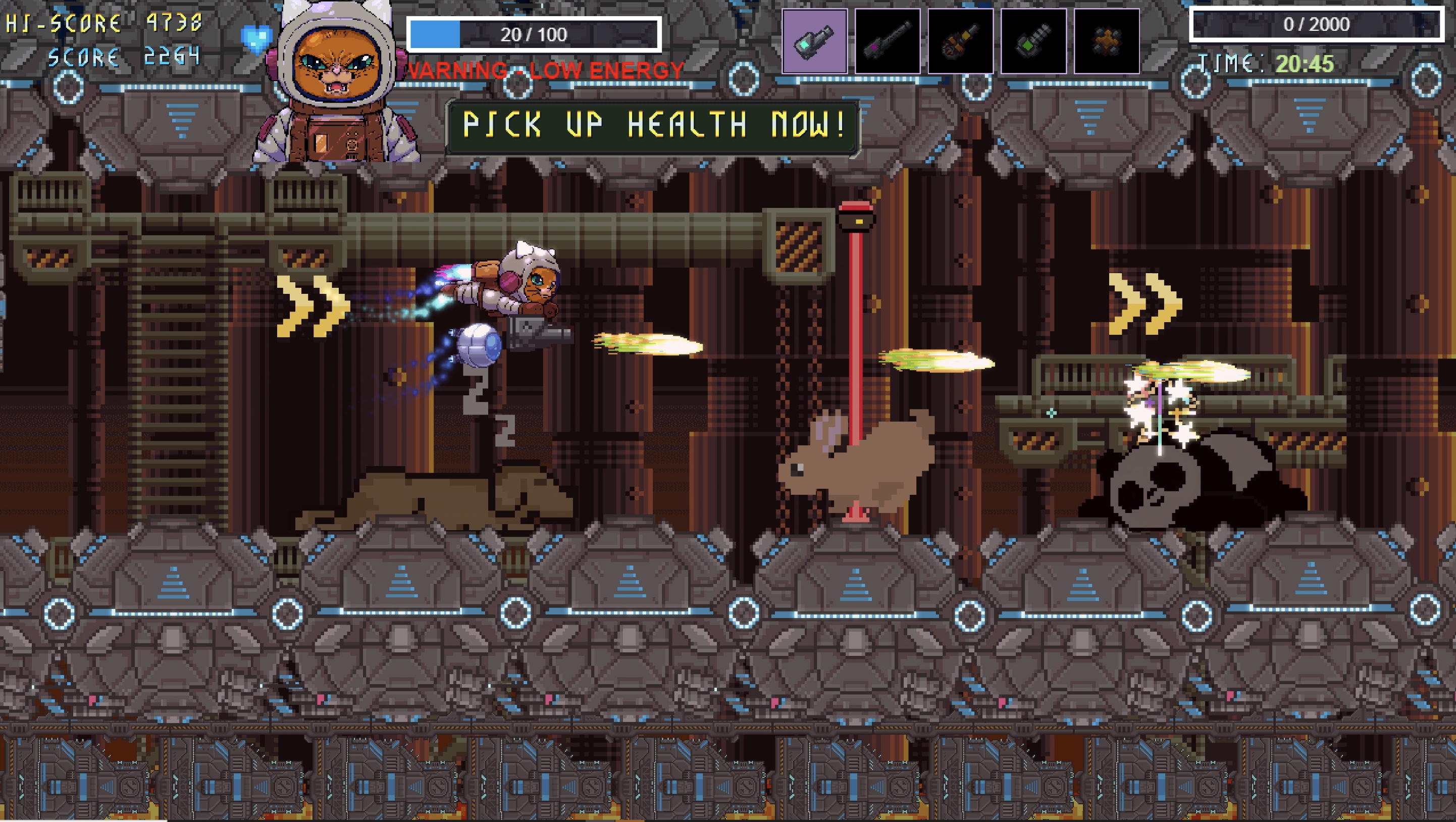
5. FirstLook played a role in your journey with Astro Burn. How did that partnership help you go from concept to game-ready chaos?
Honestly, the partnership with FirstLook started thanks to one person: Adam Bamforth.
We met at a London Gaming Community (LFG) co-working event, where everyone grabs lunch together and chats about their projects. I was explaining how I was playtesting Astro Burn — juggling Google Docs, spreadsheets, manually sending Steam keys — and I could see in Adam’s eyes that I was making life way harder than it needed to be.
He smiled, sat me down, and said, “Let me show you something. This will take five minutes.”
Within moments, he had set me up with a free FirstLook account and walked me through how simple it was to onboard players, distribute builds, and manage feedback. And the big hook? It’s free for up to 100 users.
That same afternoon, I built the Astro Burn FirstLook page, and instantly everything felt slick, professional, and effortless — compared to my messy Google Sheets and emails.
Once I connected my Steam account, the onboarding system sprang to life. I created custom questions for playtesters, and from there, everything was automated: players signed up, linked their Discord and Steam, and grabbed their keys without me lifting a finger.
And here’s the part that blew me away:
Because FirstLook integrates deeply with Discord, my Astro Burn community started growing organically at the same time. Playtesters joining FirstLook naturally flowed into my Discord — something no spreadsheet could ever achieve.
A few months later, FirstLook evolved into more than a playtesting tool; it became a genuine indie game discovery platform. When I saw Astro Burn featured on the front page, alongside other indie gems, that was my first real moment of discovery for the game — and the player requests skyrocketed.
FirstLook didn’t just streamline my playtesting; it helped build the Astro Burn community.
Whenever I release an update, I post through FirstLook’s announcement tool, and it sends beautifully formatted, branded emails directly to testers. It feels personal and authentic — more impactful than a Discord ping — and all I have to do is write the update and hit send (or schedule it).
And like every dev today, I rely heavily on metrics. FirstLook gives me clear insight into:
🔹 how many people are actually playing
🔹 where they are in the world (super useful for early localisation planning)
🔹 their sentiment and tone
🔹 and the context behind feedback
For example, feedback from someone who played for two minutes vs someone who played for an hour are two very different signals — and FirstLook makes that visible.
In short, FirstLook helped me go from concept to game-ready chaos not just by simplifying the process, but by amplifying the community around Astro Burn. It let me spend less time on admin, and more time actually making the game.
6. Your games focus on fast, skill-based fun - but with story. How do you approach storytelling when the player’s dodging lasers every second?
For me, that’s honestly one of the toughest challenges in designing a SHMUP - because you’re constantly juggling two things at once: delivering pure, arcade-style fun and guiding the player through a story they actually care about. When lasers are flying everywhere, the risk is “bullet-hell fatigue,” so my approach is all about rhythm and breathing room.
As a designer, I try to introduce something fresh roughly every 30 seconds — a new enemy behaviour, a visual twist, or a unique level event. It keeps players engaged and curious, even in the middle of chaos.
The other key for me is pacing with short story interludes. These quick moments let players connect with Astro and AL on a character level, but just as importantly, they act as micro-breaks. It gives the player’s brain — and their fingers — a breather before diving back into the madness.
It’s that dance between intensity and narrative that makes the experience feel more than just dodging lasers - it becomes a journey.
8. Let’s talk about the star of the show - your feline pilot. Why a cat?
Honestly, as mentioned earlier in this interview, that comes straight from my own life — Astro is inspired by my real cat, Mia, who’s sassy, expressive, and has this natural “main character energy.” She was the spark.
But there’s another layer to it too. I’ve always wondered why Laika the dog gets all the fame for early space travel, yet the French space agency also sent a cat into space — and hardly anyone talks about her! So in a way, Astro represents all the curious cats out there (the ones secretly studying space-travel history on the sofa) who’ve been wondering, “Hey… where’s our spotlight?”
The robot buddy, AL, came from the same place. Mia is obsessed with tech — from her automated water fountain to chasing the hoover like it’s her sworn enemy. I kept imagining what it would be like if she interacted with a fully fledged home robot in the near future. That dynamic of an A.I. trying to keep up with a smart, augmented, attitude-filled cat felt like the perfect recipe for chaotic comedy and genuine charm.
So really, Astro and AL were born from observing Mia being… well, Mia.
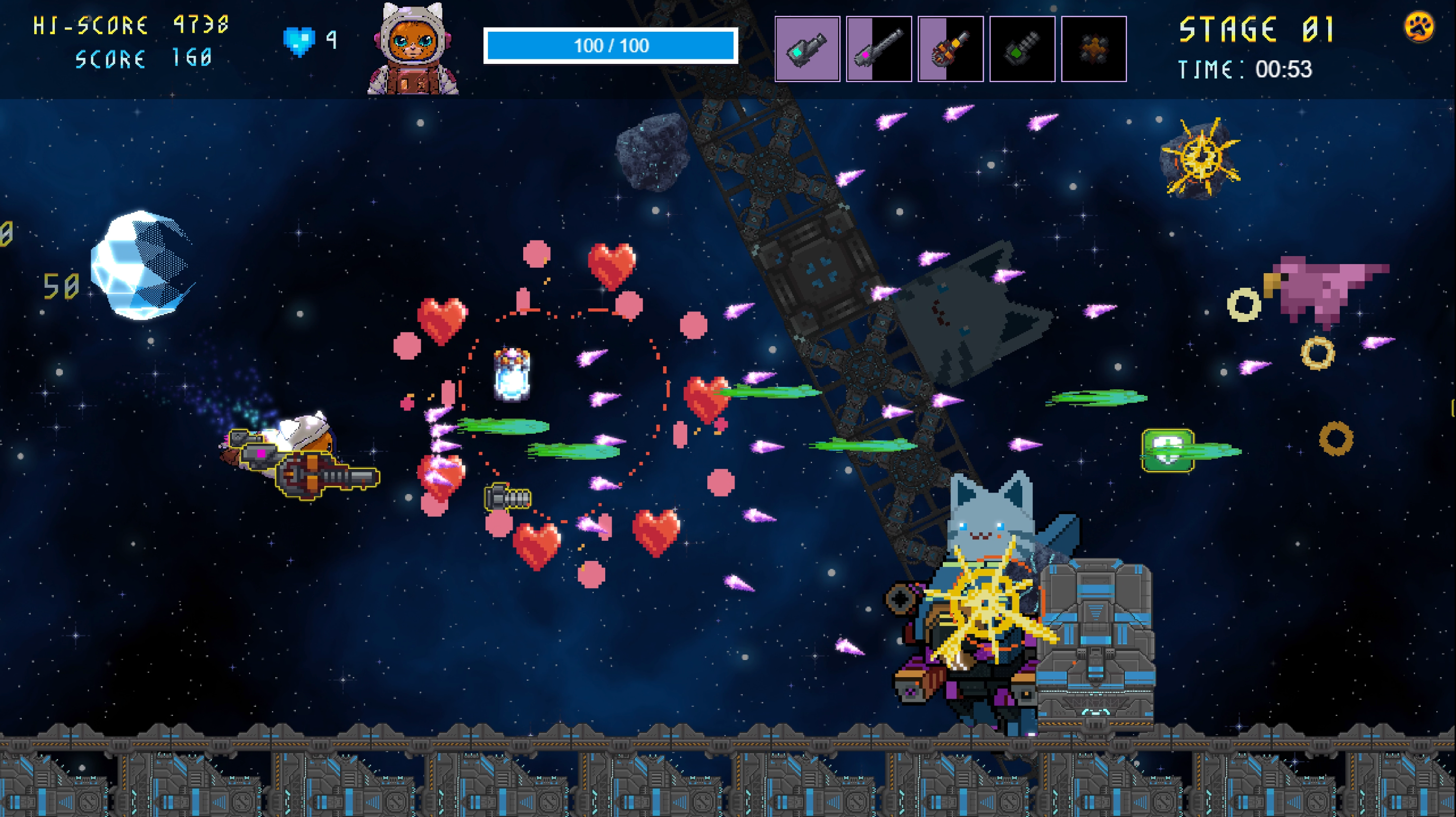
9. Every dev has their “oh no” moment. What was the toughest part of building Astro Burn - and how did you push through it?
Game development is tough — not just making the game, but getting anyone to discover it. During Steam Next Fest (October edition), I quickly realised just how oversaturated the platform is. Even with good press exposure, standing out on Steam alone is incredibly difficult.
That pushed me to think beyond the usual routes. One of the best decisions I made was to release a light, single-level version of the demo — Astro Burn: Tiny Paws Edition — on CrazyGames. Suddenly, players who don’t normally browse Steam were discovering the game, playing a bite-sized version, and then heading to the Steam page for the full demo. It became a great funnel and a reminder to expand discovery outside the traditional storefronts.
My biggest “oh no” moment came during playtests when I extended the length of a level. Players immediately reported frame-rate drops. Even after optimising assets (smaller PNGs, cleaning up objects off-screen, etc.), the second half of the level was still struggling. It drove me mad for days.
Then I replayed classics like R-Type and UN Squadron and noticed something obvious in hindsight: those games have short levels. SHMUPs throw so many projectiles, particles, explosions, and enemy behaviours on screen that memory and performance inevitably take a hit. Shorter levels allow a natural memory flush each time.
Once I embraced that — designing tighter, punchier stages instead of long ones — everything clicked. Performance stabilised, pacing improved, and the game genuinely felt more fun.
So the toughest part wasn’t just a technical challenge — it was learning to adapt, rethink, and let the game teach me how it wanted to be built.
10. Finally, what’s next for you and Beyond The Pixels? Are you sticking to the bullet-hell cosmos, or is there another genre in your sights?
We’ve got a whole slate of games bubbling in early pre-production, and the next one gearing up for full development is Syncromania — a side-scrolling, platform-action game based on my 2014 short film SYNC. Imagine a mash-up between Robocop and Streets of Rage and you’re in the right zone. I’ll be sharing a lot more about that in early 2026.
I’m also itching to one day make a point-and-click adventure in the vein of Snatcher or Policenauts — those cinematic retro classics shaped a big part of my creative DNA.
But whatever we create at Beyond The Pixels, two things are always guaranteed: it’ll have that signature retro-cool vibe, and the community will be involved from day one.
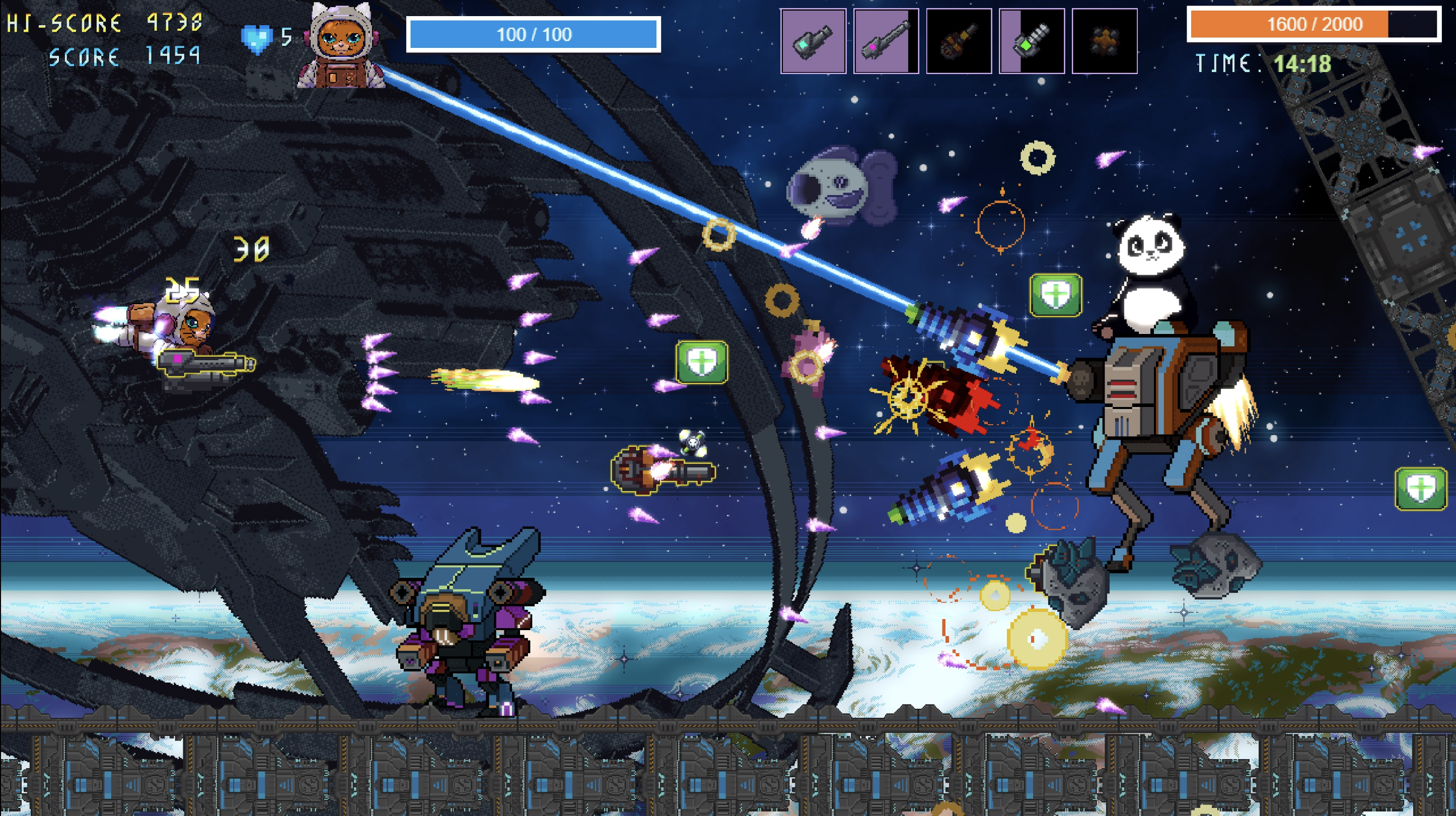
HaZ Dulull’s journey with Astro Burn shows what happens when creativity and technology collide in the right hands. By embracing the chaos of solo development, leaning on smart partnerships like FirstLook, and channeling the nostalgia of old-school shooters through modern tools, HaZ is carving out a space that’s entirely his own.
Whether you’re an aspiring developer, a film creative crossing over, or just someone who grew up mashing buttons in the arcade, Astro Burn proves one thing: the indie revolution is alive, loud, and laser-sharp.
Sign up to playtest Astro Burn today!
And psst... whilst you wait to be accepted into Astro Burn's playtest, you can play the demo right here on Steam.