Swapping engines in-flight: How Pragma helped Omeda change backends while live

Pragma Team
The client, the game server and the backend: what each one does, where platform services stop, and what it takes to build a cross-platform backend.
Sep 30, 2026 · 5 min read

Chris Cobb
Co-founder & CTO
Online games have evolved significantly in the last 25 years. Today's games cover the gamut from small independent friend-slop games to juggernaut live service titles that dominate the charts 10 years after their launch. Across this spectrum, backend services are increasingly part of what it takes to launch and support a game. The requirements and scope vary significantly, but any time players want to enjoy a game together without sitting next to each other on a couch, online services are the magic that makes that happen.
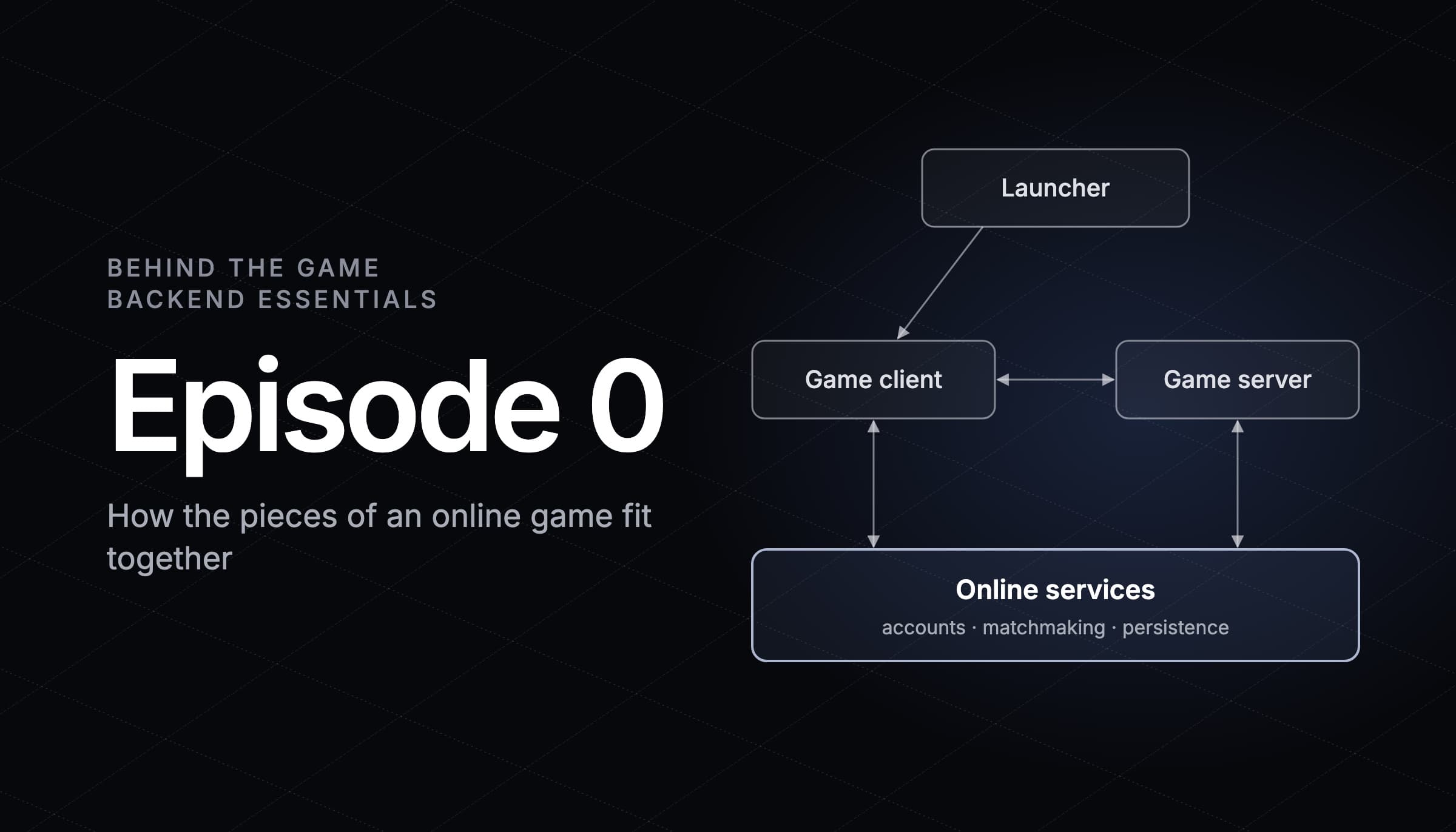
There are three major components to a multiplayer game: the game client, the game server, and the backend. The game server facilitates the actual multiplayer gameplay, while the backend deals with accounts, matchmaking, persistence, and everything else outside the game required to get players connected and playing together.
Another layer of complexity involves cross-platform, cross-play, and cross-progression features (we'll refer to these as cross-x features). Fortnite blew open the doors by allowing players on mobile to connect with friends on PC and console (and the rest, as they say, is history). Each platform has its own technical and policy concerns (most consoles don't want you displaying a competitor's logo in a cross-platform friends list).
So let's put these pieces together into a skeleton of how they fit, then dive a bit deeper into the backend part of the tech stack. The terms "backend" and "online services" will be used interchangeably throughout this series; unfortunately there is little terminology standardization across the various platforms and providers.
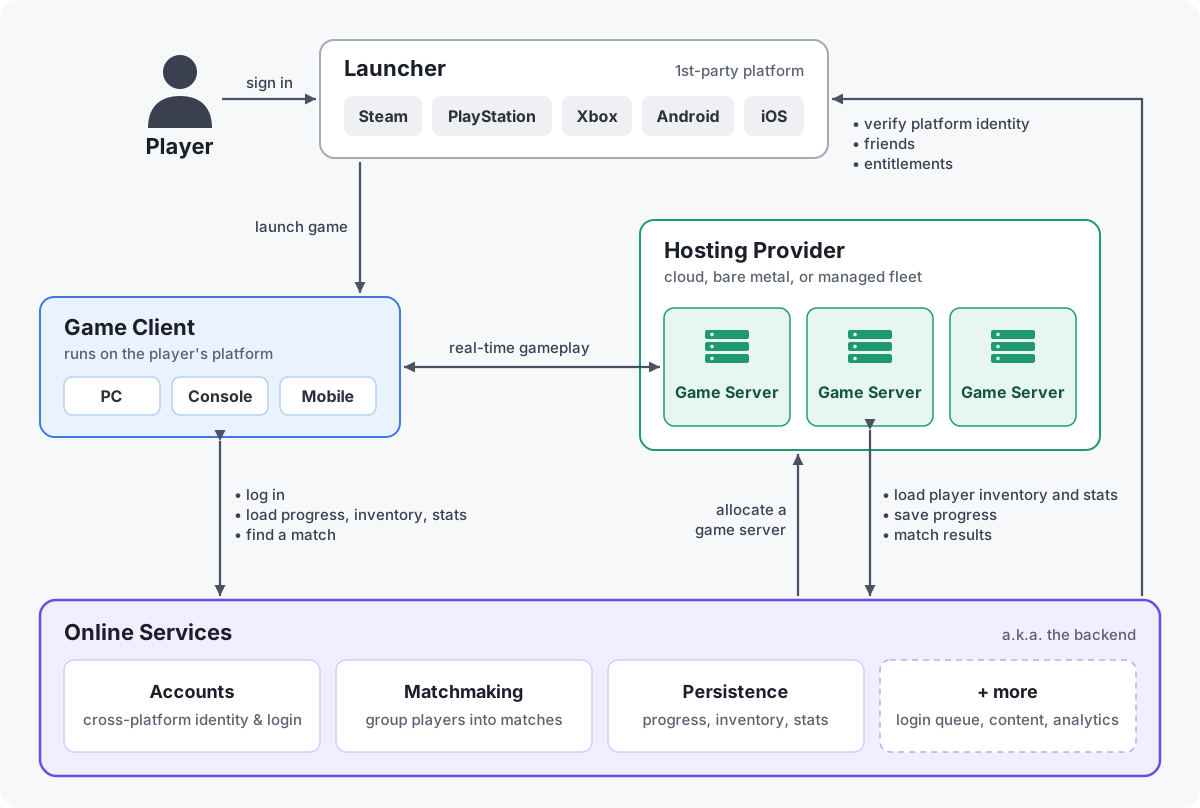
For developers working in Unreal, the Online Subsystem (OSS) provides a suite of tools that enable developers to connect to and leverage online features provided by the various platforms, such as Steam, Epic, PlayStation, and Xbox. This enables developers to leverage the social features within the platform, achievements systems, and some portions of the capabilities required for online play. The primary challenge when utilizing these services is that they are primarily locked to just that platform. The PlayStation APIs do not facilitate crossplay with Xbox, Steam achievements do not work on the Epic Games Store, and so on. Therefore developers are met with the daunting task of implementing (and re-implementing) these features across each platform. While Unreal's OSS abstraction helps, there's still a lot of work that must be implemented by the developer.
The alternative is for a studio to build out a custom backend with a cross-platform account system not tied to one platform. The benefits are flexibility, control, and the cross-x capabilities they afford, while the cost is substantial development time, effort and risk. The backend must be scalable, resilient, and remain compatible and compliant with shifting platform requirements, all while powering the actual feature set that the game needs.
For a studio without an AAA budget, this requires spending valuable engineering resources on underlying infrastructure and scale, which often means having to reduce feature scope. It's tough to know how much to invest in preparing for scale when it's unclear until launch day how many players will arrive. Underinvest and you risk a catastrophic launch (see Anthem and Payday 3); overinvest and you may find cutting too many features has produced a lackluster offering for players.
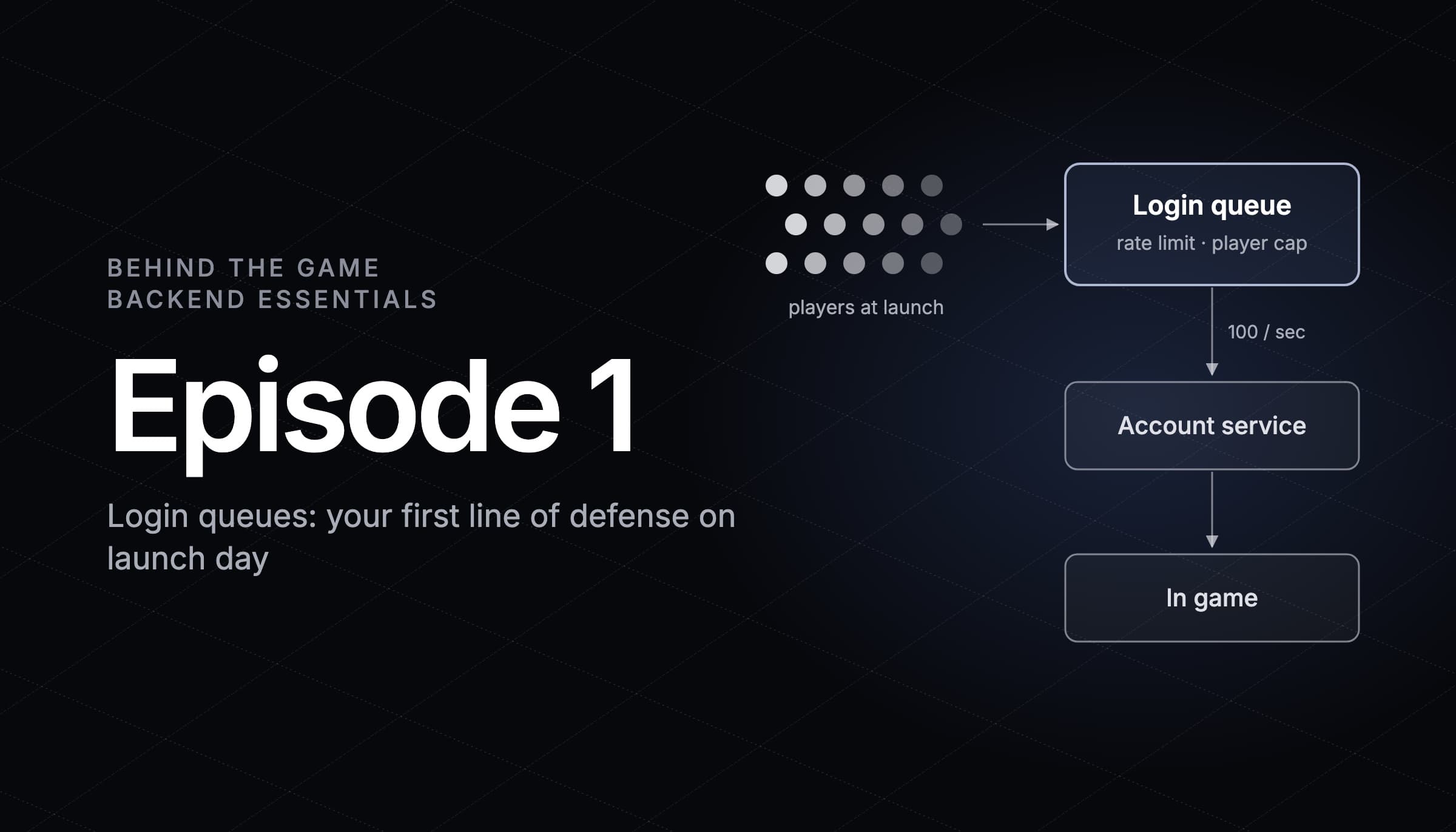
This series will tackle many of the challenges faced when building out a backend solution and how we address them at Pragma. We'll discuss critical topics such as launch day preparation, login queues, observability, matchmaking, player and game data and content, analytics, and more.
Unreal Engine doesn't build a video game for you. Instead it provides a rich, sophisticated toolchain that solves many of the underlying challenges of 3D game development. Pragma takes direct inspiration from this model: it provides scalable, proven solutions for authentication, accounts, SDK, transport, persistence, caching, analytics, observability, and everything else required to build out your own backend features. Pragma provides full source access and was explicitly designed to be extended, customized, and built upon, so studios can build their backend features without the years of low-level engineering expertise and time required to build those foundational pieces.
Continue with the next topic in the series, login queues: why they are important, how they fail, and what you can do to protect your launch day from disaster!
Customer story
Pragma Team
About the author

Chris Cobb
Co-founder & CTO
Chris Cobb is the co-founder and CTO of Pragma. As an engineering lead at Riot Games, he helped scale the backend behind League of Legends to more than 100 million players, and additionally led anti-toxicity and anti-cheat initiatives. Pragma has launched many of the most exciting independent games in recent years, including Wardogs that peaked over 400k concurrent players and 3 million sales in its first weeks.