

How Omeda Studios moved Predecessor, a live free-to-play MOBA, from its previous backend onto Pragma Engine without taking the game offline.

Brian
Industry Expert

Shigeru
Industry Expert

Chris Cobb
Industry Expert
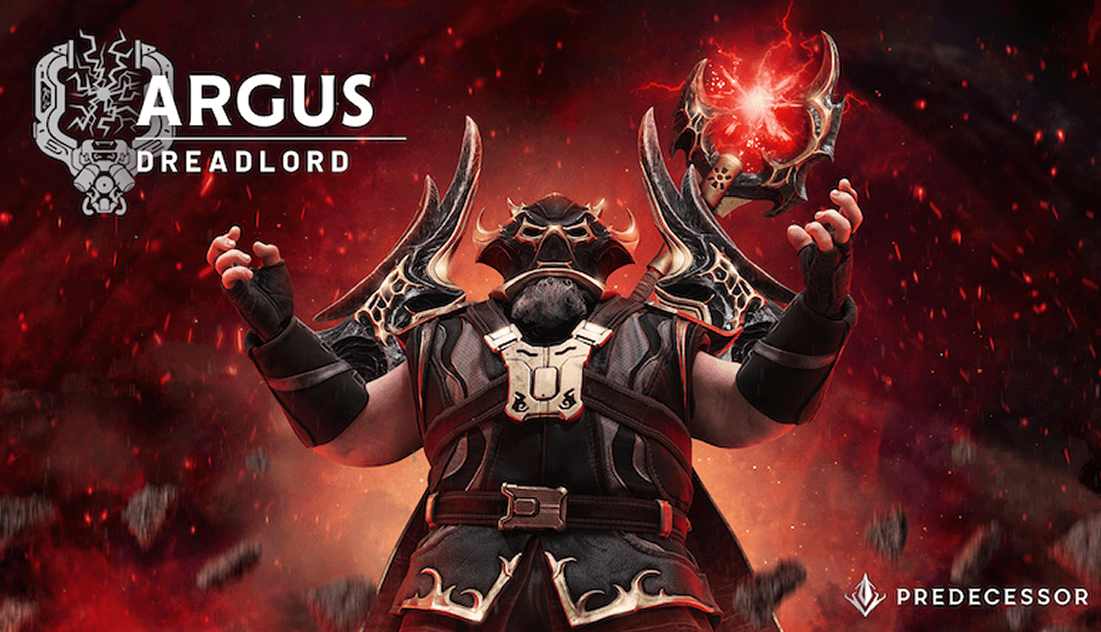
On its surface the V0.15 update for Predecessor seemed like another big content drop for the free-to-play multiplayer online battle arena (MOBA). Omeda Studios used it to add the game's third original character—a powerful off-kilter dwarven mage named Argus the Dreadlord. The update also peppered the map with explosive flowers, introduced a new in-game currency for unlocking heroes, rolled out some balance changes, and overhauled the game's item descriptions.
But easily the biggest change to the already-live Early Access game—a seismic shift designed to solidify Predecessor's foundation for longterm and evolving online play, carried out over months of development with the help of backend engine provider Pragma—all happened behind the scenes.
While players potentially noticed quicker and more responsive matches, they probably didn't think much of it. "If we do a really good job, no one notices we exist," said Jon Sredl, senior manager of the live production and game operations at Omeda Studios.
Omeda Studios likened the shift between backend online service providers—especially for a game that's already live and open to players—to rebuilding a plane mid-flight. That it went off without a crash is testament to the skill of the developers at Omeda, a studio that's been testing fate since it launched in 2020.
But it also has to do with the deep knowledge of Pragma, a backend engine provider with a history of delivering the sort of online service support that allows the likes of developers People Can Fly, Frost Giant, Lightforge Games, and Mountaintop the ability to focus on the creative aspects of building their games. In the case of Omeda, Pragma's help also focused in on to very specific areas for Predecessor: multiplayer and pre-launch load testing.
To help Omeda Studios replace the online services for MOBA Predecessor, Pragma "moved mountains," said Sredl.
To understand Predecessor, you need to understand Paragon, developed by Epic Games and released in Early Access in 2016. Paragon was an exciting new take on the free-to-play MOBAs that were drawing so much interest at the time. It used Unreal Engine 4 to create detailed, intriguingly designed characters that battled it out in third-person across a lavish map.
Paragon was a passion project inside Epic, a game created by a team given the chance to try their hand at anything. They decided they wanted to create this take on the MOBA genre with an eye toward injecting more action elements and verticality into the genre.
Then Fortnite happened.
The sudden, incredible success of Fortnite's Battle Royale mode in late 2017 eventually led to a decision by Epic Games to end development on Paragon in 2018. Months later, Epic Games announced that it would release all $17 million worth of game assets for free, to be used by anyone working with Unreal Engine 4.
The shutdown and news of the free content sparked a lot of interest, both from experienced developers and Paragon fans.
Singh soon became the game's top creator—but then in January of 2018, Epic announced they would be closing the game down in April.
Sredl found the game through some of Singh's videos and later landed work at Epic Games working on Paragon. But his role shifted three days into his new job.
"We had an all-hands meeting at Epic and they announced the closure of the game internally and then two days later we announced the closure of Paragon to the community," he said. "It was hard. It was hard for the whole team within Epic. A lot of people had been working on Paragon for years and years and it was really a deeply loved product internally."
When Singh later heard that Epic was releasing all of the Paragon content for anyone to use, his first thought was of all of the different things that could be created with those assets—but then he started thinking about the times he spoke with the game's developers, suggesting ideas for Paragon.
"Maybe I was right, maybe I was wrong, but now I could actually try and build the game myself," he said.
Dónal Mac Carthy, Lead Backend Engineer at Lightforge Games and former Senior Software Engineer at Epic Games
Work on Predecessor started in 2018, after Singh discovered like-minded fans of Paragon—Steven Meilleur and Andrea Garella. The three came together through a Twitch stream Meilleur was hosting where the future Chief Technology Officer was trying to rebuild the game live. Two years later, Omeda Studios was founded by Singh, Meilleur, and Andrea Garella, now the game's level designer. By 2021 the studio had made enough of a name for itself that it received funding from Epic Games' Epic MegaGrants Program.
While the team had Epic's original Paragon assets to work with, they still had to figure out the game's mechanics, and also rework some of the meta to help make the game a bit more compelling.
And layered on top of all of that was the overwhelming need to have a solid online backend. As a player, Singh had never had to think much about the major changes that would sometimes roll across Paragon's servers, completely changing the way characters behaved, leveled up, or purchased in-game items.
We definitely didn't know how difficult it was to run a live service game. If you thought just getting the video game to a shippable start was hard, now try patching every few weeks. It's very tricky.